


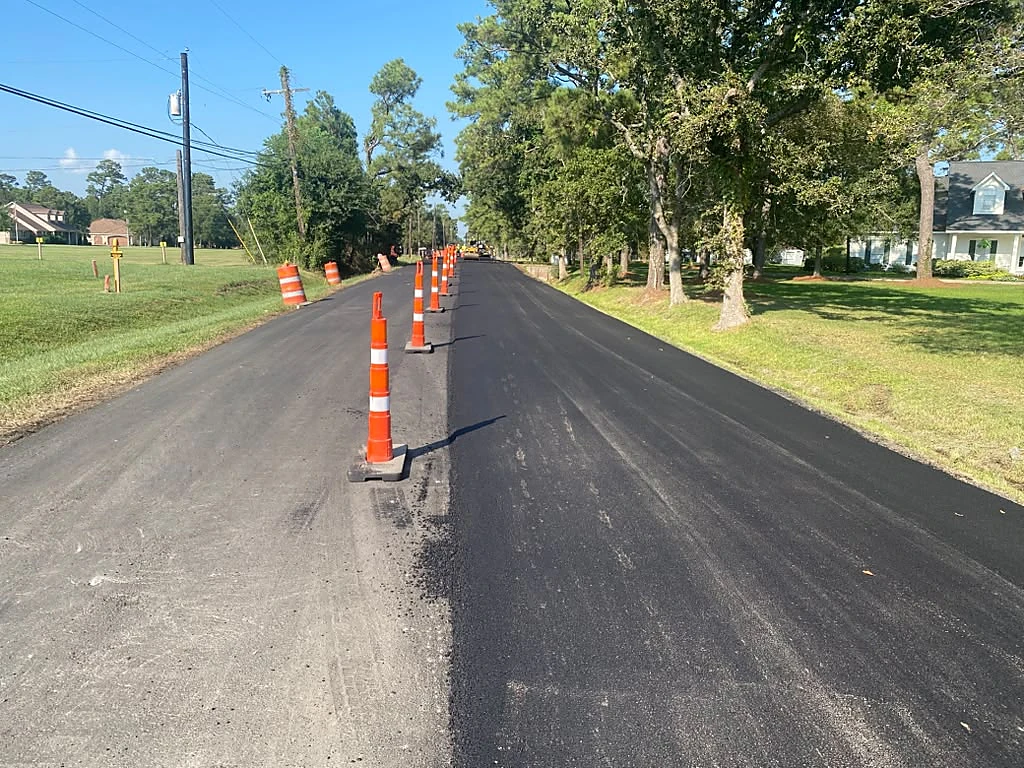
Asphalt wears at the surface before it fails underneath. A driveway or parking area can look dry, gray, and rough while the layers below are still stable. In that case, resurfacing places a new asphalt surface over a pavement that can still support traffic.
The review starts with the existing pavement, not with a standard package. Cracks that stay tight, light raveling, and a surface that has oxidized are often surface problems. Wide cracks, settled areas, pumping, and repeated patches usually mean the base is no longer holding the surface in place.
Drainage belongs in the same look. Water that sits on the pavement, runs toward a building, or enters open cracks will keep breaking the surface even after a new layer is placed. If the water problem is not addressed, a new surface does not last the way the owner expects.
Milling is one way to make room for that new surface. It is used when the old asphalt needs to come off so the finished grade can meet curbs, gutters, or doors. An overlay without milling can be appropriate when the existing surface is sound and the extra thickness will not create a lip or a drainage problem.
BRZ Construction treats resurfacing, patching, and reconstruction as different methods. The method follows the condition of the pavement and how it will be used. A price is not published here because thickness, milling, base repair, access, and the size of the area all change the work.